Electrical and Plumbing Hazards Under the Sink
Unsafe under-sink plumbing and electrical can cause leaks, sewer gas, water damage, or electrical shock. A home inspection helps identify these hazards before they become expensive or dangerous.



Unsafe under-sink plumbing and electrical can cause leaks, sewer gas, water damage, or electrical shock. A home inspection helps identify these hazards before they become expensive or dangerous.
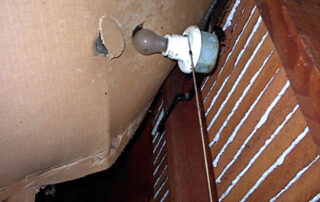
Electrical hazards in attics can remain hidden for years, increasing the risk of fire, costly repairs, failed inspections, and serious safety issues after moving in.
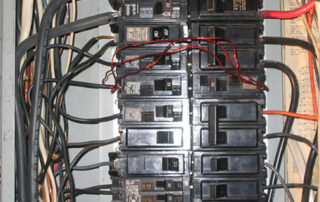
Exposed wires, overloaded circuits, double-tapped breakers, warm outlets, flickering lights, and missing GFCI/AFCI protection can signal electrical hazards worth addressing.
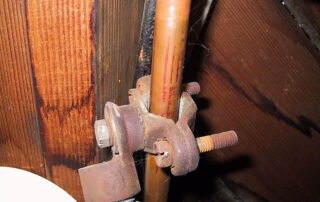
Et tu, plumber? Back in the day, this would have been the house’s “main grounding connection.” It’s where the electrical service was grounded to the house’s steel water pipe. Somewhere along the way, someone changed out the thicker steel pipe for a more slender copper tube. Disturbed rust on the screw threads shows where someone loosened the clamp to change it, but callously [...]
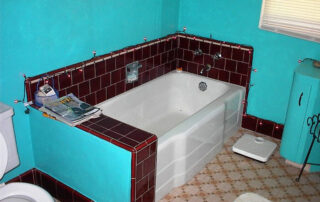
Perhaps these Christmas lights could be relocated... to a place where they’re not likely to fall into a tub of water containing a person. Just a thought.
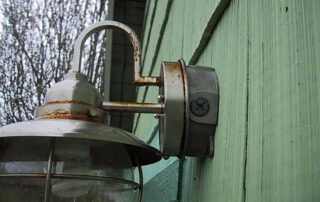
Rule #63 of home inspections: If anyone *can* do their own electrical wiring, anyone *will* do their own electrical wiring. Especially with Home Depot and Lowes there to encourage them. This light fixture is intended to be installed over a flush-mount electrical box. (That’s a box that fits inside the wall and is flush with the surface of the wall – or better, yet, [...]
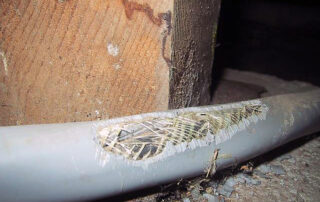
Insulation and Wiring - Rule #62 of home inspection: If a rodent *can* gnaw on a thing, it *will* gnaw on that thing. All rodents, including mice and rats, have four front teeth that never stop growing and must be worn down to keep them at a manageable size. If necessary, they’ll simply grind their teeth together to keep them at a manageable length, [...]
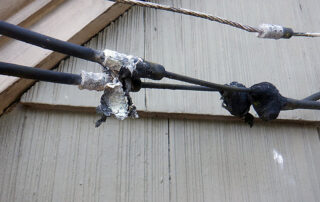
Avoid a "hot" summer. This electrical service drop contains a variety of defects: Both the utility splices are exposed at the "hot" legs of the service drop. The exposed conductors could shock or kill a person or animal. A strong wind could blow the splices into each other, causing an electrical arc that would damage them and pose a fire hazard to the house. [...]
