Plumbing Traps Under Sinks
A damaged or improperly installed sink trap can cause leaks, water damage, drainage problems, unpleasant odors, and sewer gases to enter the home.

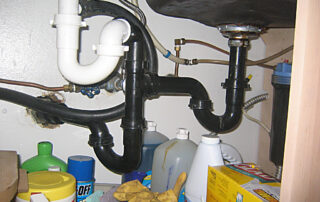
A damaged or improperly installed sink trap can cause leaks, water damage, drainage problems, unpleasant odors, and sewer gases to enter the home.
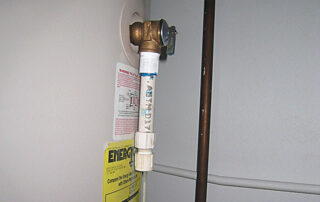
A faulty or missing T&P safety valve can lead to dangerous pressure buildup, increasing the risk of leaks, property damage, or water heater failure.

Unsafe under-sink plumbing and electrical can cause leaks, sewer gas, water damage, or electrical shock. A home inspection helps identify these hazards before they become expensive or dangerous.

A plumbing trap holds water to block sewer gas. Missing P-traps, poor venting, loose joints, leaks, or corrosion can lead to odors, moisture damage, and costly repairs.
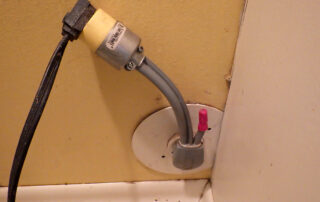
So you bought a gas range... Our intrepid homeowner switched from an electric range to a gas range. To accommodate the new range, any electrician could easily have changed the old 240-volt circuit to a 120-volt circuit, but our hero came up with a better way: Mangle the old range cord to make an “adapter.” Why is that a problem? Let us count [...]
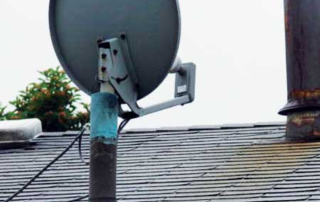
A Sirius problem? A few things are wrong here. The most obvious is the plumbing vent pipe that supports a satellite dish. Our plumbing code calls this “flagpoling” and prohibits it outright. Plumbing vents shouldn’t support any other objects, including television aerials, satellite dishes, and, of course, flagpoles. Flagpoling can cause the horizontal portion of the vent (in the attic) to sag and [...]
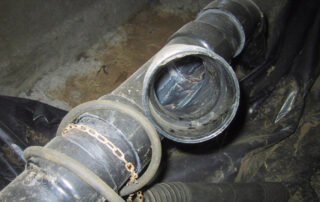
The plumber knows he forgot something. He just can’t remember what. When plumbing a new house, plumbers must pressure-test the waste pipes to ensure that the system doesn't leak. Leaks might allow waste water or sewer gas to enter the house. So, when the drain piping is complete, the plumber inserts a test plug and fills the drain system with water all the [...]
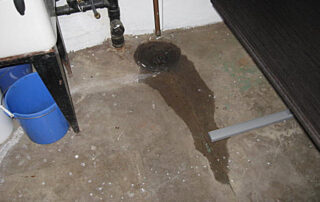
Basement floor drains are supposed to *remove* basement water, not bring it in. One of the reasons that home inspectors run so much water during an inspection is to reveal problems like this one. The basement floor drain is connected to the main sewer line, which doesn’t drain fast enough. As a result, some water backs up into the basement. While this might [...]
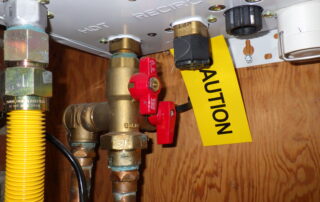
Temperature and pressure relief (TPR) valves are critically important safety devices. When one fails or is improperly installed in a way that prevents it from doing its job, a traditional tank-style water heater can behave like a bomb (or a rocket). Here, a flush kit for a tankless water heater is installed upside down, placing a shut off valve between the hot water [...]
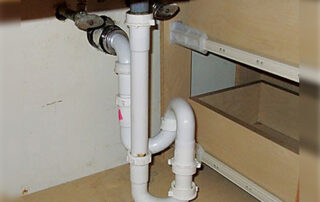
A trombone comes to mind... Or maybe miniature golf. Drainpipes under a sink should be simple: a small U-shaped bend called a “trap” holds a plug of water to prevent sewer gas from rising out of the drain. This plug of water should never be more than 4” deep and the remaining drainpipes should be as short and direct as possible. The drain [...]
